Filing fire damage claims is different from almost any other type of property claim — the damage is immediate and dramatic, but what gets covered, disputed, or denied often comes down to details most homeowners never think to document. Understanding the process before a fire happens — or right after one does — can make the difference between a fair settlement and months of back-and-forth with your insurer.
What’s Typically Covered in Fire Damage Claims
Most Florida homeowners policies cover fire damage caused by accidental fires — electrical malfunctions, cooking accidents, lightning strikes, and similar sudden events. Coverage typically extends to:
- Structural damage to the home itself
- Smoke and soot damage throughout affected areas
- Personal belongings destroyed or damaged by fire, smoke, or the firefighting response
- Additional living expenses if the home is temporarily uninhabitable
Smoke and Soot Damage: Often Underestimated
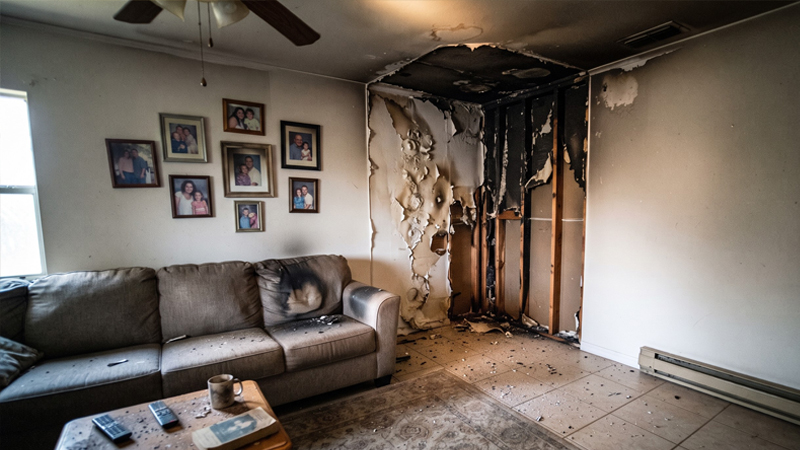
The fire itself may only touch one room, but smoke and soot travel through HVAC systems and settle throughout the entire property — including rooms that look untouched at first glance. This is one of the most common reasons fire damage claims get underpaid: the initial estimate accounts for the visible fire damage but misses the full extent of smoke contamination in adjacent rooms, closets, and ductwork.
Odor remediation is another piece that’s frequently left out of early estimates. Smoke odor can remain embedded in drywall, insulation, and fabrics long after visible soot is cleaned — and properly addressing it often requires more than surface cleaning.
Reasons Insurance Companies Deny Fire Claims
Fire claims are investigated more closely than most other property claims, and insurers look for specific reasons to limit or deny payment:
- Questions about the cause — accidental vs. suspected arson or negligence
- Missed fire safety maintenance, like faulty wiring known but unaddressed
- Underinsurance — the policy’s dwelling coverage doesn’t match the true rebuild cost
- Disputes over the scope of smoke damage in areas away from the fire itself
A fire insurance claim denied for cause-related reasons can often be challenged with a proper fire investigation report and documentation — but the burden is usually on the homeowner to push back with evidence.
Contents Claims: Don’t Underestimate What Was Lost
Beyond the structure itself, a full fire damage claim should account for personal belongings — furniture, electronics, clothing, and anything damaged by fire, smoke, heat, or water used to fight the fire. Many homeowners underestimate the value of their contents when filing quickly, which leaves real money on the table. A detailed inventory, even reconstructed after the fact with receipts, photos, or bank statements, strengthens this part of the claim significantly.
Pack-Out and Restoration: What To Expect
For larger fires, the restoration process often includes a “pack-out” — professionally removing salvageable belongings from the home for cleaning and storage while structural repairs happen. This process should be documented and covered under the claim, not treated as a separate out-of-pocket cost. Insisting on a full pack-out inventory, rather than a quick visual estimate, protects against items being overlooked or undervalued.
Don’t Forget the Water Damage From Fighting the Fire
Fire suppression itself often causes significant water damage — hoses, sprinkler systems, and standing water from extinguishing the fire can soak floors, drywall, and belongings that the flames never touched. This secondary damage should be included in fire damage claims as part of the same loss, not filed or evaluated separately. Overlooking it is one more way claims end up underpaid.
Frequently Asked Questions
What are common reasons insurance companies deny fire claims?
The most common reasons involve disputes over the cause of the fire, underinsurance relative to rebuild costs, missed maintenance issues, or disagreements about the true scope of smoke damage beyond the immediate fire area.
Does homeowners insurance cover smoke damage from a neighboring fire?
In most cases, yes — smoke damage from a nearby fire is typically covered as a sudden, accidental event, even if the fire itself didn’t start on your property.
How long does an insurance claim fire investigation take?
Fire claims often take longer than other property claims because insurers frequently bring in fire investigators to determine cause. This can add weeks to the timeline, especially for larger losses.
What if my fire insurance claim was denied?
A denial isn’t always final. A licensed public adjuster can review the fire investigation findings, the policy language, and the documentation to determine whether the denial can be challenged.
Should I start cleaning up before the adjuster inspects the damage?
Document everything with photos and video first. Reasonable steps to prevent further damage (like tarping a roof) are expected, but full clean-up before documentation can make it harder to prove the true extent of smoke and soot damage.