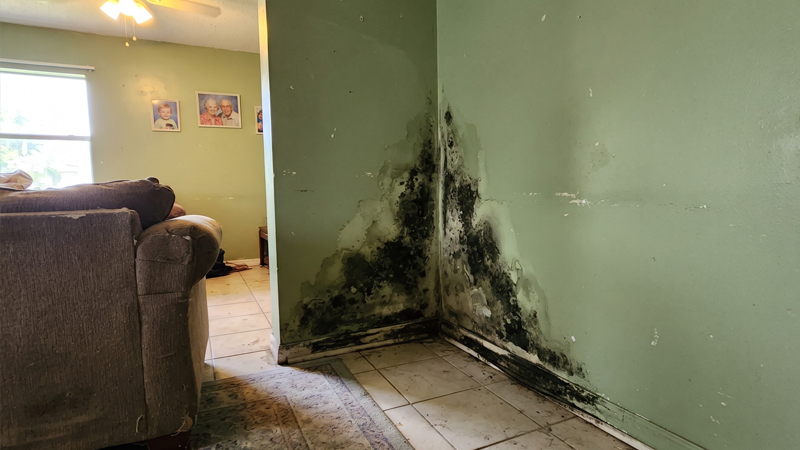
Does homeowners insurance cover mold? The short answer is: sometimes — but Florida policies handle mold very differently than most other types of damage, and it’s one of the most disputed areas in property insurance claims.
Does Homeowners Insurance Cover Mold in Florida?
Most Florida homeowners policies cover mold only when it results from a sudden and accidental covered event — like a burst pipe or storm-related roof leak. Mold that develops from long-term humidity, poor ventilation, or delayed repairs is typically excluded, even if the underlying cause was originally covered.
This is why a mold damage claim so often gets disputed: insurers look closely at how long the moisture was present before mold developed, not just whether mold exists.
Florida’s Mold Coverage Cap
Even when mold is covered, most Florida policies limit how much they’ll pay for mold remediation — commonly capped around $10,000, unless the homeowner purchased additional mold coverage separately. This cap catches many homeowners off guard, especially when the underlying water damage claim itself is fully covered but the mold remediation portion is not.
- Check your policy’s mold endorsement or rider before assuming full coverage
- Ask your agent whether additional mold coverage is available and what it costs
- Keep in mind the cap applies to remediation costs, not necessarily to repairing the underlying cause
Mold After Water Damage: The Most Common Scenario
The most frequent mold claims in Central Florida start as water damage claims — a plumbing failure, a roof leak, or storm intrusion that isn’t fully dried out. Mold can begin forming within 24 to 48 hours of moisture exposure, which means:
- Fast mitigation after any water event directly reduces mold risk
- Documenting mold early — with photos and dates — helps tie it back to the original covered event
- Waiting too long to report water damage can shift the mold claim from “covered” to “excluded” in the insurer’s eyes
Hidden Mold: Why It’s Often Underestimated
Mold doesn’t always show up where you can see it. Behind drywall, under flooring, and inside HVAC systems are common places where mold grows undetected — sometimes for months. An insurance company’s initial inspection may not catch it, which is exactly why a mold damage claim can be underpaid if the scope of the estimate doesn’t account for what’s happening inside the walls.
Health Concerns and Documentation
Beyond property damage, mold exposure is a legitimate health concern, particularly for people with asthma, allergies, or compromised immune systems. According to the CDC, mold exposure can trigger respiratory symptoms and allergic reactions in sensitive individuals — which is one more reason mold shouldn’t be treated as a cosmetic issue when documenting a claim.
Mold Testing and Remediation: What To Expect
A proper mold claim typically involves two separate steps:
- Testing — confirming the type and extent of mold, often through air quality sampling or surface testing
- Remediation — the actual removal process, which can range from a simple clean-up to full drywall and insulation replacement depending on severity
Insurers sometimes try to settle based on testing results alone, before the true remediation scope is known. Getting a full remediation estimate — not just a lab report — is what protects the claim from being underpaid, since the real cost of fixing a mold problem correctly is often higher than the initial testing report suggests.
Every policy is different, and the answer to does homeowners insurance cover mold really depends on three things: what caused the moisture, how quickly it was addressed, and what your specific policy language says about mold exclusions and caps.
Frequently Asked Questions
Does homeowners insurance cover mold removal?
Only when the mold results from a sudden, covered event — and even then, most Florida policies cap remediation costs, commonly around $10,000 unless additional coverage was purchased.
Is mold insurance worth it?
For homeowners in humid climates like Florida, additional mold coverage can be worth it — especially if the standard policy cap wouldn’t cover a full remediation after a significant water event.
Why do mold claims get denied so often?
Most denials come down to timing — insurers argue the mold developed from long-term moisture or poor maintenance rather than a sudden covered event. Strong documentation of when the water damage occurred is what usually determines the outcome.
Can I file a mold claim separately from a water damage claim?
Typically no — mold coverage is tied to the underlying cause of loss. If the water damage itself wasn’t a covered event, the resulting mold usually isn’t either.
What if my mold damage claim was already denied?
A denial isn’t always final. A licensed public adjuster can review the denial, the policy language, and the documentation to determine whether the claim should be reopened.